
Residential Rooftop Solar Systems
A Smart Solution for Clean & Affordable Power
Rooftop Solar Systems—also known as Residential Rooftop Solar Power Plants—are rapidly becoming one of the most popular renewable energy solutions for homes across urban and rural India. With solar energy being one of the most abundant and accessible clean energy sources, more homeowners are switching to solar to reduce electricity bills, increase energy independence, and contribute to a greener environment.
Millions of households and residential complexes are now installing Rooftop Solar Panels to harness sunlight and convert it into usable electricity. If you’re planning to install a Residential Rooftop Solar System, here’s everything you need to know.
Installation Requirements for Residential Rooftop Solar Installations
To ensure a successful installation, the following conditions should be met:
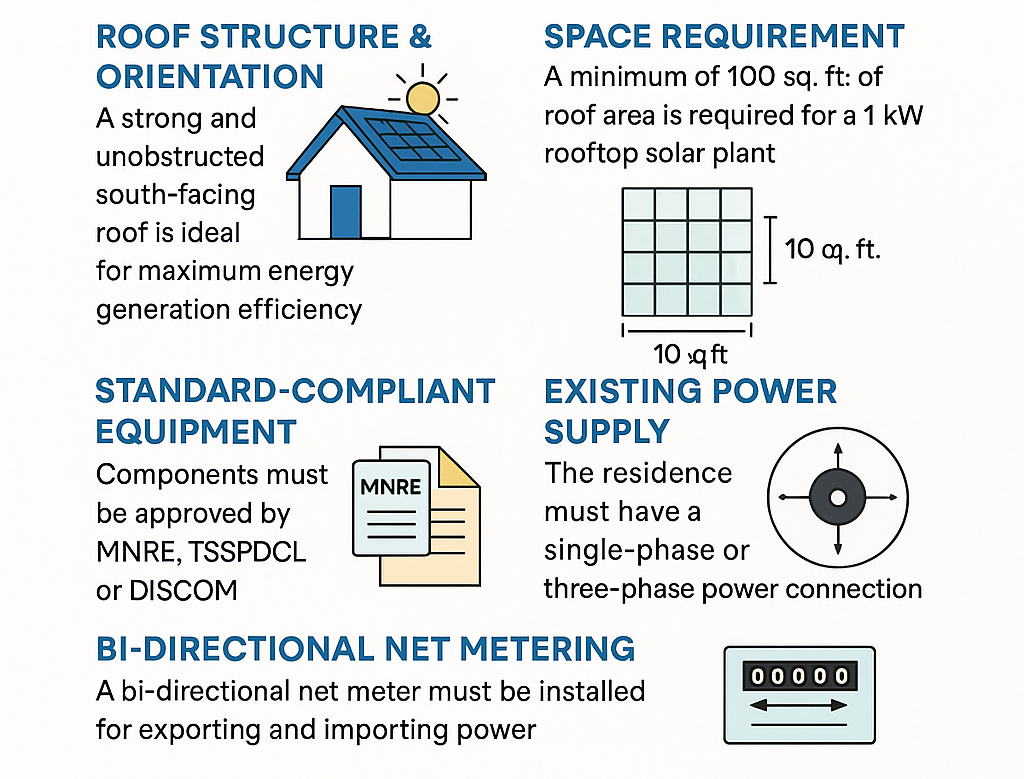
1. Roof Structure & Orientation
A strong and unobstructed roof is essential for installing solar panels.
South-facing roofs offer the highest energy generation efficiency in India.
Proper structural assessment ensures the panels can be mounted securely and positioned for maximum sunlight exposure.
2. Space Requirement
A minimum of 100 sq. ft. of roof area is required to install a 1 kW Rooftop Solar Plant.
Larger systems (2 kW, 3 kW, 5 kW, 10 kW, etc.) require proportionally more space.
3. Standard-Compliant Equipment
To qualify for government subsidies and grid connectivity, the system must use components approved by MNRE / TSSPDCL / DISCOM.
This includes solar panels, inverters, mounting structures, wiring, and protection devices.
4. Existing Power Supply
The residence must have either a single-phase or three-phase power connection.
This ensures compatibility between the existing electrical system and the solar installation.
5. Bi-Directional Net Metering
A Bi-Directional Net Meter must be installed to measure both:
Power generated and exported to the grid.
Power imported from the grid.
Net metering helps homeowners reduce monthly electricity bills significantly.
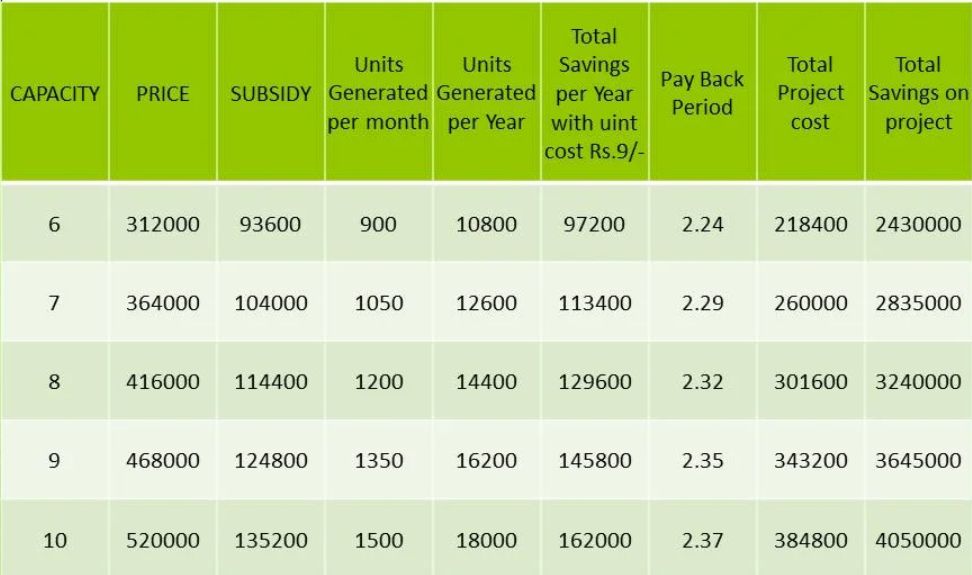
Rooftop Solar Plant Prices for Residential Homes
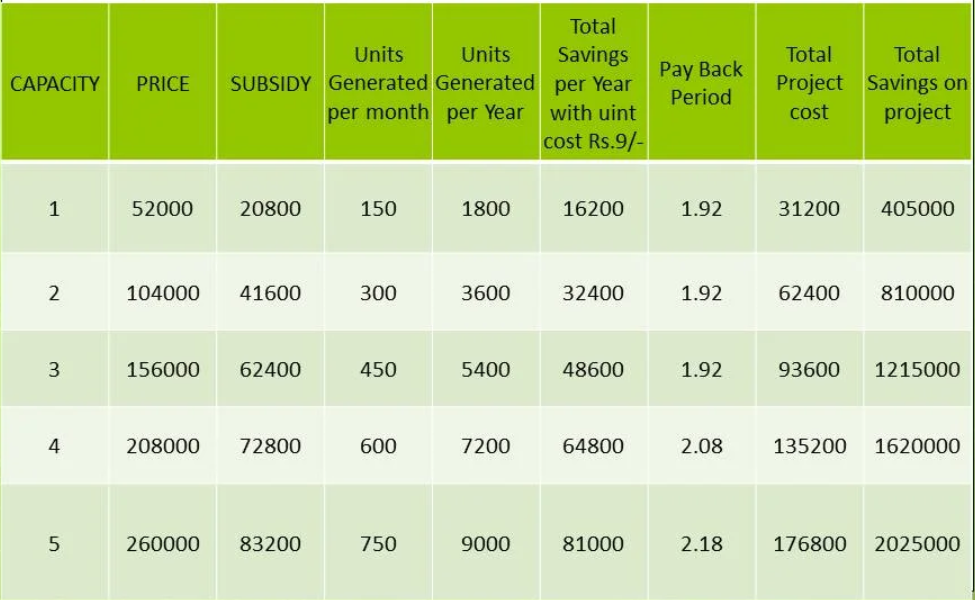
The cost of installing a Residential Rooftop Solar Plant varies based on system capacity, brand, technology, and installation requirements.
Typical price ranges (approximate) include:
1 kW Rooftop Solar Plant: Ideal for small homes
2–3 kW Systems: Suitable for medium-size households
5 kW and above: Ideal for larger homes with higher consumption.
Prices may vary depending on:
Type of solar panel (Mono PERC, Half-cut, etc.)
Type of inverter (String, Hybrid, or Micro-inverter).
Battery backup requirements
Installation structure and site conditions
For exact pricing, customers typically request a customize quote.
How It Works
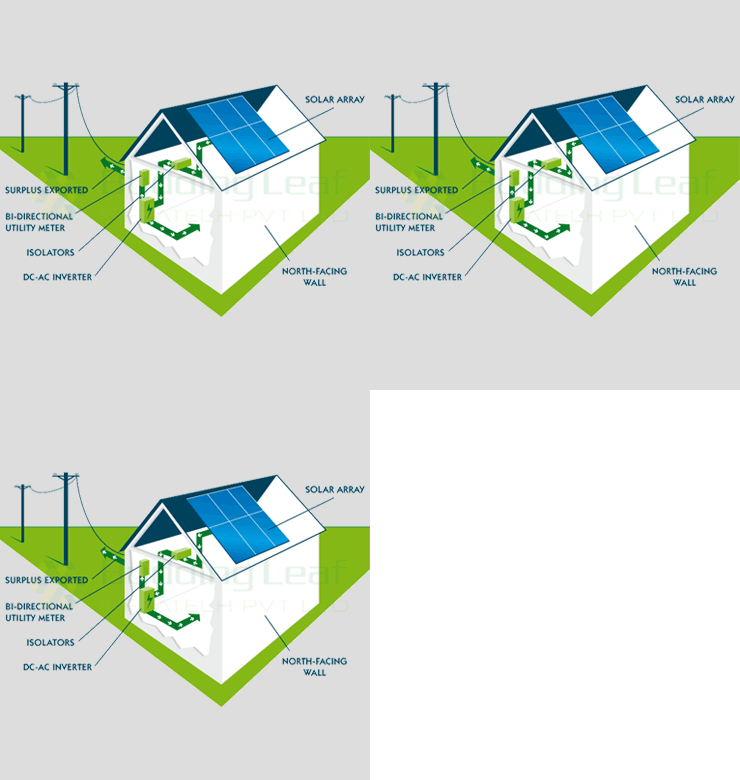
1. The mechanism of working of the solar panels is that it absorbs the sunlight as a source of energy and then converts it into electricity.
2. The solar panels are composed of many solar cells – which are photovoltaic (PV). This is the reason why solar power panels are also referred as solar PV panels
3. It is these panels that absorb sunlight
4. Once solar energy is completely absorbed, a chemical reaction is triggered within the solar cells which release electrons coverts solar energy into direct electric current (DC)
5. An inverter then converts Direct Current produced by the solar panels to Alternating Current (AC) used in homes/residential buildings, as majority of household devices run on Alternative Current
6. A bi-directional meter measures energy used and excess energy produced
7. Excess electricity is fed to the grid
Types of Solar Power System
ON-GRID/GRID-TIED/NET-METERING
On-Grid Rooftop Solar Systems can actually reduce your monthly electricity bill! Since on-grid systems are incorporated with main grid supply, the power generated using solar energy during the day can be used and consumed by powering appliances and devices in homes as per the need. The excess solar electricity produced can be fed back to the grid. During night hours or cloud cover, the power can be drawn from the grid.
The grid-tied solar systems work on Net-Metering technology. In such systems, a Bi-Directional electricity Net-Meter installed in your homes or residential complexes records the power used, excess power exported to the grid and power imported from the grid.
If the electricity import from the grid, besides your power consumption from the solar electricity is more, you pay to the electricity board. But if the export of your solar power to the grid exceeds at the month-end, the board pays you the compensation.


OFF-GRID
Rooftop Solar Panels can either be grid-connected or off-grid. The ‘off-grid’ Rooftop Solar Systems are not linked to the main grid but with battery storage. The electricity generated by the solar panels is stored in the battery system attached to the panels. This stored electricity can then be used to operate household devices and appliances.
The off-grid Solar Systems run by their own battery making it extremely reliable source of power. The main advantage of such a system can be advocated by the fact that it makes you independent of power cuts. Off-grid system comes to the fore during load shedding or when living in remote areas where power cut is quite frequent.
If the electricity import from the grid, besides your power consumption from the solar electricity is more, you pay to the electricity board. But if the export of your solar power to the grid exceeds at the month-end, the board pays you the compensation.
Our Projects
Lorem ipsum dolor sit amet, at mei dolore tritani repudiandae. In his nemore temporibus consequuntur, vim ad prima vivendum consetetur.
Contact us
Avi Buildtech is a leading solar energy business solutions provider offering extensive clean energy solutions and consultancy services for setting up on-site (rooftop and ground mounted), off-site, domestic, institutional and commercial solar projects